


 Call us:



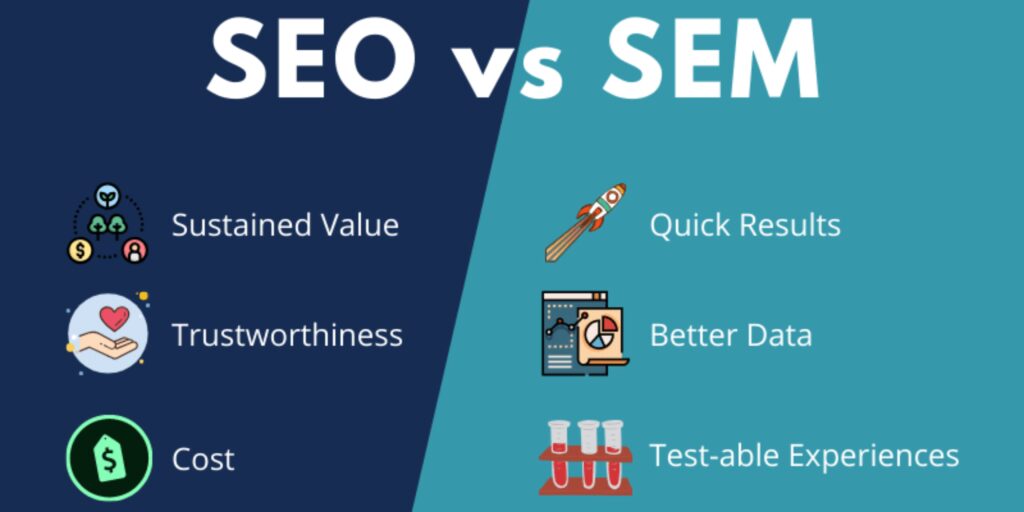
SEO vs SEM: Which is better, and which one do you prefer?
SEO (Search Engine Optimization) and SEM (Search Engine Marketing) are terms in the digital marketing world, which are easily misunderstood. The two strategies are employed in encouraging traffic generated by search engines such as Google although they operate differently and with varying objectives. The distinction between SEO vs SEM may enable the companies to follow the correct direction to attract target group and develop in the virtual world.
What is Search Engine Optimization (SEO)?
The art of SEO is to make your site optimize so that it appears on a search engine result page (SERP) without requiring payment. It entails making websites better organized, better in content and user experience, to be more appealing to the search engines such as Google and Bing.
Key components of SEO:
- On-Page SEO: Title tags, meta description, internal linking, optimization of contents, and the use of keywords.
- Off-Page SEO: Backing up of links, social networking, and branding.
- Technical SEO: Site speed, mobile-friendliness, secure connection (HTTPS) and structured data.
Pros of SEO:
- Long-term results
- Increased credibility and trust.
- Proves to be cost-effective in the long term.
Cons of SEO:
- Takes time to see results
- Needs regular work and updates.
- The rankings can be influenced by the changes in algorithms.
What is Search Engine Marketing (SEM)?
SEM is more of a broader approach involving both SEO and paid advertising, though in most cases, it implies paid search advertising (PPC – Pay-Per-Click). SEM is the commercial practice of placing pay-per-advert on search engines in order to be ranked first in terms of the search results of specific keywords.
Common SEM platforms:
- Google Ads
- Bing Ads
Key components of SEM:
- Keyword bidding
- Ad copy creation
- Landing page optimization
- Monitoring and statistics of the campaigns.
Pros of SEM:
- Instant presence and traffic.
- Accurate targeting (geographical, device, demographics).
- Measurable and scalable results.
Cons of SEM:
- Can be expensive over time
- When you quit paying so does the traffic.
- Needs constant budgeting and tracking.
SEO vs SEM: A Side-by-Side Comparison
| Feature | SEO | SEM |
|---|---|---|
| Traffic Type | Organic (free) | Paid |
| Time to See Results | Long-term | Immediate |
| Cost | Low (but time-intensive) | High (but fast) |
| Trust Factor | High – users trust organic listings | Lower – users may skip ads |
| Best For | Long-term authority and traffic | Short-term campaigns, quick leads |
Which is Better: SEO or SEM?
One solution does not fit all. It depends on your goals:
- Use SEO when you desire lasting growth, develop brand authority, and have the time to invest.
- Use SEM when you require visibility, high results in a short time, or when you are launching a time-related campaign (e.g., product launch or seasonal sale).
Combinations between the two should be applied by businesses ideally. Begin with SEM to create immediate traffic and leads, and develop the SEO over time to benefit in the long term.
Conclusion:
The distinction between SEO and SEM is crucial for developing an effective digital marketing strategy. Whereas SEO creates the platform to organize organic growth, SEM provides you with the ability to increase visibility in a short period of time. Combined prudently, they can generate high-quality traffic and yield potent outcomes.